| | Biker News - Regularly updated
Category: Random
-
|
SAM SUNDERLAND BEGINS ULTIMATE AROUND-THE-WORLD CHALLENGE ON TRIUMPH TIGER 1200
- Two-time Dakar Rally Champion Sam Sunderland is attempting to circumnavigate the globe in record time on Triumph Tiger 1200 Rally Explorer
- Sunderland will cover more than 18,000 miles across five continents, riding close to 1,000 miles a day
- Sunderland departs London on 5 September, aiming to beat the existing record of 19 days, 8 hours and 25 minutes
Two-time Dakar Rally Champion and Red Bull athlete Sam Sunderland has begun his extraordinary attempt to set a new world record for the fastest circumnavigation of the globe by motorcycle, on Triumph’s Tiger 1200 Rally Explorer.
The Red Bull athlete will ride the Tiger more than 18,000 miles across five continents, averaging close to 1,000 miles each day and spending up to 17 hours a day in the saddle. The official record that Sunderland is attempting to beat – 19 days, 8 hours and 25 minutes of riding time – has stood unbeaten for more than two decades.
Sunderland’s six-leg route begins today in London before heading to Istanbul, followed by a section through Southeast Asia from Bangkok to Kuala Lumpur. He will then cross Australia from Perth to Sydney, ride the length of New Zealand and tackle the longest section of the journey across North America, from Vancouver to Montreal. The final leg will take him from Casablanca back to London. Throughout the journey Sunderland will pass some of the world’s most iconic landmarks, including the Bonneville Salt Flats, and traverse the treacherous Australian outback.
The scale of the challenge places exceptional demands on both rider and motorcycle. Sunderland will encounter changing climates, unfamiliar roads, extreme temperatures and widely varying terrain, while managing fatigue, border crossings and multiple time zones with up to six long-haul transfers.
The official clock is paused during ocean crossings, but under the rules of the record, Sunderland and his Tiger must complete the entire riding route together, travel in a single direction, touch two antipodal points and be completed on the same motorcycle. Sunderland expects to spend around 17 hours riding on some days, with the cumulative effects of sleep deprivation, jet lag and mental fatigue becoming increasingly important as the journey progresses.
"One of the toughest parts of this challenge for me is definitely the miles that we have to cover," Sunderland says. "I'm going to be riding for 17 hours a day, back to back, over many days. I feel like that accumulation's going to build up and it's definitely going to be tough."
Nick Bell, Chief Marketing Officer, Triumph Motorcycles added: “The scale of Sam’s Red Bull challenge is extraordinary. Covering more than 18,000 miles across five continents in less than 19 days will place huge demands on both rider and motorcycle, which makes the Tiger 1200 Rally Explorer the natural choice for this attempt, and Sam has what it takes to succeed.”
–
ABOUT TRIUMPH
- First established in 1902, Triumph Motorcycles celebrated 120 years of motorcycle manufacture in 2022. For more than three decades, Triumph Motorcycles has been based in Hinckley, Leicestershire, and has produced iconic bikes that perfectly blend authentic design, character, charisma, and performance.
A GLOBAL BRITISH SUCCESS STORY
- Record global sales of 141,683 motorcycles were delivered in Triumph’s latest Financial Year (FY25: July 2024-June 2025), through a network of 950 dealers in 68 countries, confirming Triumph Motorcycles’ position as the largest British motorcycle manufacturer.
- Triumph currently employs around 3,000 personnel worldwide and has subsidiary operations in the UK, North America, France, Germany, Spain, Italy, Japan, Sweden (Scandinavia), Benelux, Brazil, China, and Thailand as well as a network of independent distributors. Triumph has manufacturing facilities in Hinckley, Leicestershire, and Thailand plus CKD facilities in Brazil and India.
A WORLD-CLASS RANGE
- With a laser-sharp focus on what riders across the world are looking for, a passion to deliver the perfect ride for every customer, and attention to detail that delivers the highest quality motorcycles, Triumph offers a growing range of category-leading motorcycles spanning Modern Classics, Roadsters and Adventure bikes. From the accessible Speed 400cc TR series to the Rocket 3 with its powerful 2500cc engine, every model exemplifies Triumph’s iconic style, quality and performance.
- Delivering a fun, agile and confidence-inspiring ride for riders of all ages and experience levels, the Speed 400 and Scrambler 400 X launched in 2023 with a brand-new single engine platform (TR Series), representing incredible value for money and bringing Triumph to a whole new generation of riders. The range has now expanded to include the Scrambler 400 XC, Thruxton 400 and Tracker 400.
- The Modern Classics feature Triumph’s legendary Bonneville twin engine. Famously named to celebrate Triumph’s 1956 land speed record on the Bonneville Salt Flats in Utah, USA, the Bonneville was the original British superbike and a race-winner straight out of the crate, chosen by famous motorcyclists of the past for its handling, style, and character. Now, the Bonneville family has evolved, with rider-focused technology and cool custom style. The range includes the Bonneville Bobber, Bonneville Speedmaster, Speed Twin 900, Speed Twin 1200, Scrambler 900, Scrambler 1200 and the iconic Bonneville T120 and T100.
- The Roadsters start with the agile and popular Trident 660 and Trident 800, with the sporty Daytona 660 and Street Triple 765 RS and RX, and finally the Speed Triple 1200 RS and RX. For adventure riders, Triumph has a complete line-up of epic Tigers, starting with the Tiger Sport 660 and Tiger Sport 800, moving up to the Tiger 900 range, and finally to the Tiger 1200 range.
- Triumph’s debut in the competitive off-road arena has delivered outstanding results, with race wins and podium finishes for the TF 250-X, TF 450-X, TF 250-E, and TF 450-E, which have all delivered at the highest level on some of the off-road world’s most competitive stages. 2025 also saw the addition of a TF 450-X and two new cross-country models, the TF 250-C and TF 450-C.
- In October 2025, Triumph Motorcycles launched its first electric youth motorcycles; the new Triumph TXP range, powered by OSET. This collaboration with the OSET team, who joined the Triumph family in 2022, has resulted in four new models with scalable electric performance, premium design, and built-in safety features for children as young as three. Each bike is engineered from the ground up with age-specific frames, geometry, controls, and components, optimised for the rider's size and experience.
TRIUMPH RACING
- Triumph has a glorious racing history, competing in and winning races in almost every class and field of motorcycle sporting achievement, from winning the second ever Isle of Man TT in 1908, to the thrilling last-lap victory at the legendary Daytona 200 by Brandon Paasch on the Street Triple 765 in 2022.
- Triumph’s racing legend continues as the exclusive engine supplier to the FIM Moto2™ World Championship since the start of the 2019 season. Triumph Motorcycles provides all the teams with race-tuned 765cc triples, each of which is based on the class-leading Street Triple RS powerplant. Redefining the class, Triumph broke record after record in the inaugural year, including the first ever +300km/h Moto2™ top speed. Reflecting these great successes, the wonderful feedback, and partnerships that Triumph have had with the riders and their teams, and the incredible response from Triumph fans across the world, Triumph and Dorna, decided to extend the relationship in 2021 and again in 2023, signing a new contract for another five years of racing: 2025 – 2029.
- Triumph is working with PTR Triumph Factory Racing to participate in the 2026 World Supersport Championship. Tom Booth-Amos and Oli Bayliss are racing on the Street Triple 765. Macadam Triumph Factory Racing continues with British Supersport riders Brad Perie and Max Wadsworth. Triumph will also enter the all-new Sportbike World Championship with the Daytona 660. On the roads Triumph will compete at the Daytona 200 and the NW200 with the PTR Triumph Racing team, with KTS Macadam Triumph Factory Racing also lining up for a number of stops on the road racing calendar including the IOM TT.
- In 2023, Triumph announced its intention to compete in the 2024 MXGP/MX2 and SuperMotocross World Championships, and after two successful seasons, is racing with a four-rider team for 2026. Jordon Smith, Austin Forkner, Jalek, and Mikkel Haarup are racing for the British manufacturer, competing for the first time in AMA 450 Supercross with the TF 450-X, as well as the AMA 250SX East Championship with the TF 250-X. Triumph will also compete in the AMA Pro Motocross series in both categories. Triumph earned its first Main Event win in Supercross in February 2025, and has enjoyed podium finishes in the Pro Motocross series in ’24 and ‘25. In the FIM MX2 World Championship Camden McLellan is competing for a third season aboard Triumph machinery, alongside Guillem Farres with positive momentum in the new season thanks to podium results from ’24 and ’25, as well as a first moto win in April 2025.
- In September 2024 Paul Edmondson was officially appointed Team Manager of Triumph Factory Racing’s enduro programme. In 2025, Jonny Walker took 2nd place overall in the SuperEnduro World Championship on his TF 250 and finished the 2025 Red Bull Erzbergrodeo on a near-standard TF 250-E four-stroke. Walker went on to win the AMA EnduroCross championship with the TF 450-E. Triumph earned podium finishes in the Enduro1 category of the EnduroGP World Championship with riders Mikael Persson and Morgan Lesiardo. Lesiardo took Triumph’s first Enduro1 overall victory and EnduroGP podium. Triumph competed at its first International Six Days Enduro in August with the TF 250-E contributing to Italy’s World Team Trophy victory with Lesiardo and Team Sweden’s first podium in decades with Persson, as well as impressive top five individual finishes overall. Triumph’s factory effort lines up with Mikael Persson and Jeremy Sydow for 2026, with Jamie McCanney moving to a role as Rider Coach.
|
-
CHARTING TRIUMPH’S OFF-ROAD JOURNEY FROM CONCEPT TO CHAMPIONSHIP-WINNING REALITY
- Deep-dive series takes viewers behind the scenes at Triumph, with key insights from Ricky Carmichael, Ivan Cervantes, Jonny Walker, Jordon Smith, and Mikkel Haarup
- Chronicles the brand’s incredible journey from its first collaborations to championship success
- First ALL IN episode premieres on Triumph’s YouTube channel on 3 September 2026 at 6pm
Triumph Motorcycles launches its first documentary series, ALL IN; a four-part programme chronicling the brand’s journey onto the global off‑road motorsport stage.
The first episode of ALL IN is now live on Triumph’s YouTube channel, with the three further episodes dropping in October, November and December. Featuring interviews with Steve Sargent, Ian Kimber, Rod Lopusnak, Ivan Cervantes and Ricky Carmichael, the first episode details the company’s decision to enter the off-road arena, behind the scenes development of the bikes, the impact of the launch on the industry and then the start of the gruelling journey in to the fiercely contested race series.
The four-part series showcases Triumph’s ambitious plans to bring an entirely new and highly competitive contender to the MX, Enduro and Cross Country championships, documenting the determination and resolve that was required to transform Triumph’s significant motorsport investment into world‑class products and credible championship wins. As well as highlighting what the nascent Triumph off-road division has achieved in an incredibly short period of time, ALL IN shows how it will continue elevating every aspect of its off‑road performance and capabilities.
“The ALL IN series shows the passion and pride we put into this project,” said Ian Kimber, Triumph Motorcycles’ Head of Global Racing Programmes. “When we started the project in 2018 we knew we had the racing DNA and the engineering calibre to succeed, and that’s why we went all in: forging partnerships, developing testing programmes, and building a bespoke dealer network for a completely new range of Motocross and Enduro bikes.
“Triumph’s move into MX, Enduro and Cross-Country championships, opened the doors on a new chapter in top-tier off-road racing. The ALL IN series highlights our journey so far and how we will continue to hone every aspect of our off‑road programmes. The journey has only just begun, but we are committed to being at the forefront of off-road racing.”
ALL IN Broadcast
The series will be available to watch at https://www.triumphmotorcycles.co.uk/motorcycles/off-road/ or on YouTube.
Episode 1: ALL IN – Without Compromise
It began with a vision: There was a long-term strategic commitment built on heritage, ambition, and belief in the competitive edge that Triumph could bring to the off-road world.
Episode 2: ALL IN – Winning Mindset
Racing validates everything: with insights from Guillem Farres and Camden McLellan, this episode focuses on the challenges as well as the breakthrough victories, podiums, and global credibility Triumph earned in the Motocross, Supercross and MX2 World Championships.
Episode 3: ALL IN – Beyond Limits
Built to conquer every challenge: Enduro heroes Paul Edmondson and Jonny Walker highlight how Triumph's enduro programme demonstrated the outstanding capability of its new contender and its consistent ability to conquer the harshest Enduro GP, Super Enduro and Extreme Enduro conditions.
Episode 4: ALL IN – Commitment to Performance
Everything Triumph has achieved so far is only the foundation: This episode depicts how Triumph’s off-road journey to date is just the beginning and how its unerring focus on research and development, testing, engineering, and long-term investment will ensure it continues to perform at the very pinnacle off off-road motorsport.
-
-
Motorcycles are well suited to local deliveries. They are compact, relatively economical, and easier to manoeuvre through congested urban areas than larger vehicles. But the bike itself is only one part of an efficient delivery operation.
Route selection, loading, timing, navigation, and rider habits all affect how many jobs can be completed during a shift. Small inefficiencies become expensive when repeated across dozens of deliveries.
Start With Better Route Planning 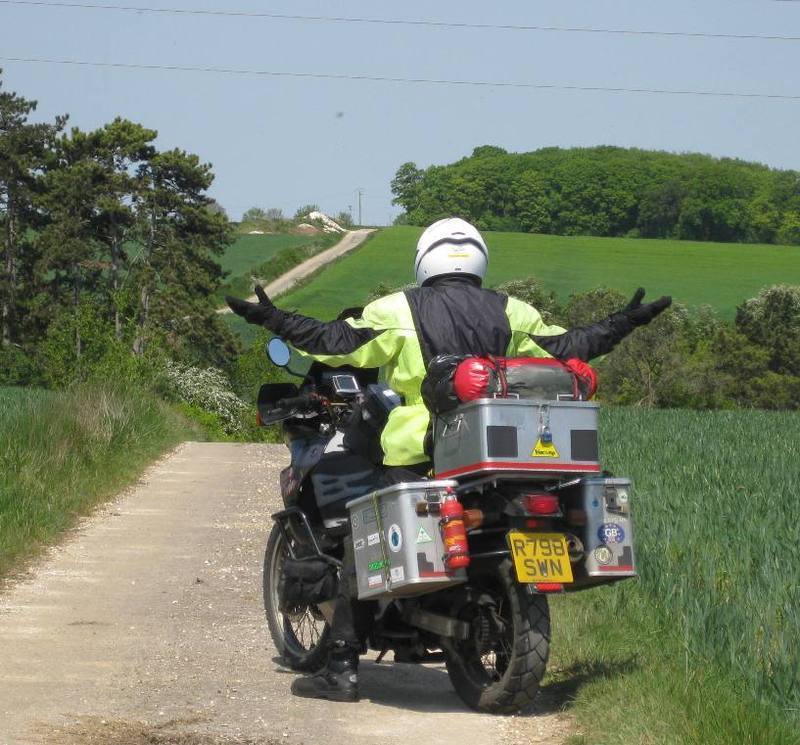
A delivery route should be planned around more than distance. The shortest route is not always the fastest. Junctions, one-way systems, traffic lights, road restrictions, and congestion can add significant time to a short journey.
This matters on UK roads. Department for Transport figures show that local A roads in England had an average speed of just 23.0 mph in 2024. Average delay was 48.3 seconds per vehicle per mile compared with free-flow conditions.
For riders handling several addresses, planning the sequence of stops before leaving can reduce unnecessary mileage and repeated sections of road. A free route planner tool can help organise multiple destinations into a more practical route.
Good route planning should consider:
-
The location of every delivery
-
Required delivery times or customer windows
-
Road restrictions and access limitations
-
Expected traffic conditions
-
The distance between consecutive stops
-
Where the rider can safely stop and unload
The objective is not simply to cover fewer miles. It is to reduce total journey time while keeping the route predictable.
Group Deliveries by Location
When several deliveries are assigned to one rider, grouping stops geographically can make a major difference.
Suppose five customers are located across three neighbouring areas. Sending the rider back and forth between those areas creates unnecessary mileage. A better approach is to complete one cluster before moving to the next.
This becomes particularly useful during busy periods. The rider spends less time making route decisions and more time completing deliveries.
However, geographical grouping should not override delivery deadlines. A stop with a strict time window may need to be prioritised even if it sits outside the main cluster.
Keep the Motorcycle Ready for Work
Mechanical reliability directly affects delivery efficiency. A minor problem can turn into a missed delivery schedule and lost working time.
Before a shift, riders should check the basic operating condition of the motorcycle. Tyre pressures deserve particular attention because incorrect pressure can affect handling, braking and fuel consumption.
A practical pre-shift check includes:
The delivery box or luggage system should also be checked. Loose mounting hardware can create vibration and instability. Heavy items should be secured so they cannot move during braking or cornering.
Load the Bike for Faster Stops
Time spent at each address matters just as much as riding time.
If packages are loaded without a clear system, the rider may need to search through the storage box at every stop. That creates small delays that accumulate throughout the day.
Organise packages according to the planned route. Items for the first stops should be accessible without removing everything else. Fragile goods should be protected from movement, while heavier items should be positioned securely and within the motorcycle's luggage capacity.
Labels should be clear and easy to read. If possible, include the delivery sequence on the package or in the rider's navigation system.
Reduce Unnecessary Waiting
Not every delay happens on the road.
A rider can lose considerable time waiting for customers, searching for entrances, finding loading areas, or dealing with unclear delivery instructions.
Before starting the route, check the information available for each address. Commercial buildings may have separate entrances for deliveries. Residential developments may have restricted access or limited parking.
Where the delivery system allows it, customers can also be given an estimated arrival window. Clear instructions reduce the likelihood of the rider having to make additional calls or search for the correct location.
Use Data to Improve Future Routes
Efficiency improves when delivery performance is measured.
Record basic information such as total deliveries, kilometres travelled, shift duration, failed delivery attempts, and average time per stop. After several shifts, patterns become easier to identify.
One route may consistently cause delays during the afternoon. Another may contain too many difficult access points. A particular group of addresses may work better at a different time.
Motorcycle traffic in Great Britain reached 3.0 billion vehicle miles in 2024, up 3.5% from 2023 and 10.6% above 2019 levels, according to the Department for Transport.
As motorcycle use grows, efficient route management becomes increasingly useful for businesses relying on two-wheeled delivery vehicles.
Build a Repeatable Delivery System
The most efficient motorcycle delivery operation is rarely based on riding faster. It comes from removing wasted time.
Plan the route before departure. Group nearby addresses. Load packages in delivery order. Keep the motorcycle maintained. Record performance and adjust routes when the data shows a recurring problem.
These practices make each individual delivery more predictable. Over a full working day, that can mean fewer unnecessary miles, less waiting, and more completed jobs without placing additional pressure on the rider.
article supplied
-
|