| | Biker News - Regularly updated
Category: Other
-
... Rides 201,901 Miles To Raise Money For Myotonic Dystrophy Foundation
Indian Motorcycle, America’s First Motorcycle Company, is celebrating four world records set by Indian Motorcycle owner Patrick “Vroom Old Man” Cornell. Piloting his 2025 Indian Pursuit, Cornell embarked on a mission to raise awareness and funds for Myotonic Dystrophy, a rare genetic disorder that affects the muscles and other parts of the body. Cornell travelled 201,901 miles (324,928 km) across the United States and Canada and raised $150,000 to support the cause.
Over the course of 12 months, the Indian Pursuit, named “Pappy,” endured thousands of on-road hours, changing weather, varied terrain and the demands of an unprecedented long-distance ride. The journey ultimately earned Cornell four world records, putting the durability and endurance of the Pursuit and its PowerPlus 112 engine at the centre of an achievement few motorcycles and riders could match.
Cornell’s four world record titles, recognised by Atlas World Records, include:
- Most Consecutive Days Riding at Least 1,000 Miles (1,609 km) on a Motorcycle
- Longest Consecutive Period Averaging at Least 1,000 Miles (1,609 km) Per Day on a Motorcycle
- Greatest Documented Distance Ridden on a Motorcycle in a Single Country Before Returning Home
- Greatest Documented Distance Ridden on a Motorcycle in Twelve-Consecutive Months
“Pat’s journey is an incredible example of what it means to use your passion to make a difference,” said Mike Kennedy, CEO of Indian Motorcycle. “To ride more than 200,000 miles in a year is an extraordinary accomplishment on its own, but Pat’s purpose was far greater than the ride itself. His four world records are a remarkable testament to his determination, perseverance and commitment to the cause. We’re proud that an Indian Motorcycle was part of this incredible journey, and even more proud of Pat for using his passion for riding to help others.”
When asked how he accomplished such an incredible feat, Cornell simply said, “Ride for someone else, don’t ride for yourself.” The mission was deeply personal, as Myotonic Dystrophy has affected several members of his wife’s family, including her four sisters. But as the miles continued to accumulate, Cornell’s journey became more than a selfless effort to raise awareness and funds – it also became an extraordinary testament to the durability, reliability and capability of the machine beneath him.
From coast to coast and everywhere in between, the motorcycle was subjected to the realities of sustained, high-mileage riding. Through it all, Cornell depended on his Indian Pursuit to keep him going. With the power and reliability behind the PowerPlus 112 engine, the machine delivered an unmatched ride that optimized acceleration across the rev range for unrivalled passing power in every gear.
The Indian Pursuit proved its reliability every mile of the journey. Despite long miles and extended hours on the road, the Indian Pursuit performed exceptionally well and required only minimal maintenance. Cornell replaced the stator, changed the fuel filters five times, went through 16 back tires, 12 front tires and completed numerous oil changes. Yet the machine’s original clutch, clutch cable, drive belt and starter remained intact throughout the entire journey. Most impressively, the motor and transmission never experienced a single issue, a remarkable testament to the bike’s durability, reliability and engineering.
“More than anything, I needed a motorcycle I could trust,” said Cornell. “My Indian Pursuit never gave me a reason to question whether it could handle the journey, which allowed me to focus on why I was riding in the first place. Myotonic Dystrophy is a disease that most people have never heard of, but for the families living with it, it impacts every part of their lives. That’s what kept me going when the miles got long and the days got tough. Every mile was an opportunity to tell someone about this disease, raise money, and hopefully bring a little more attention to the people and families who are fighting it.
The world records and the miles are something I’m proud of, but knowing that this journey helped shine a light on Myotonic Dystrophy is what made it especially meaningful to me.”
Cornell’s journey initially aligned with Indian Motorcycle’s 125-year anniversary, as he set a goal of 125,000 miles (201,168 km) to raise $125,000 in 125 days. While the miles stacked, the fundraiser was slow. Cornell extended his journey and ultimately reached 146,000 miles (234,964 km) in 146 days, despite a broken collarbone sustained on the ride. His continued ride ultimately reached 201,901 miles (324,928 km), a subtle nod to Indian Motorcycle’s founding year of 1901. In total, Cornell has raised $150,000 to benefit the Myotonic Dystrophy Foundation thus far, with a goal to reach $200,000.
To follow along with Cornell’s continued journey as it comes to an end in October, you can follow him on his Facebook and Instagram. To learn more about Indian Motorcycle, riders can visit IndianMotorcycle.com or follow along on Facebook, Instagram, and YouTube.
ABOUT INDIAN MOTORCYCLE
Indian Motorcycle is America’s First Motorcycle Company. Founded in 1901, Indian Motorcycle has won the hearts of motorcyclists around the world and earned distinction as one of America’s most legendary and iconic brands through unrivalled racing dominance, engineering prowess and countless innovations and industry firsts. Today that heritage and passion is reignited under new brand stewardship. To learn more, please visit www.indianmotorcycle.com.
-
CHARTING TRIUMPH’S OFF-ROAD JOURNEY FROM CONCEPT TO CHAMPIONSHIP-WINNING REALITY
- Deep-dive series takes viewers behind the scenes at Triumph, with key insights from Ricky Carmichael, Ivan Cervantes, Jonny Walker, Jordon Smith, and Mikkel Haarup
- Chronicles the brand’s incredible journey from its first collaborations to championship success
- First ALL IN episode premieres on Triumph’s YouTube channel on 3 September 2026 at 6pm
Triumph Motorcycles launches its first documentary series, ALL IN; a four-part programme chronicling the brand’s journey onto the global off‑road motorsport stage.
The first episode of ALL IN is now live on Triumph’s YouTube channel, with the three further episodes dropping in October, November and December. Featuring interviews with Steve Sargent, Ian Kimber, Rod Lopusnak, Ivan Cervantes and Ricky Carmichael, the first episode details the company’s decision to enter the off-road arena, behind the scenes development of the bikes, the impact of the launch on the industry and then the start of the gruelling journey in to the fiercely contested race series.
The four-part series showcases Triumph’s ambitious plans to bring an entirely new and highly competitive contender to the MX, Enduro and Cross Country championships, documenting the determination and resolve that was required to transform Triumph’s significant motorsport investment into world‑class products and credible championship wins. As well as highlighting what the nascent Triumph off-road division has achieved in an incredibly short period of time, ALL IN shows how it will continue elevating every aspect of its off‑road performance and capabilities.
“The ALL IN series shows the passion and pride we put into this project,” said Ian Kimber, Triumph Motorcycles’ Head of Global Racing Programmes. “When we started the project in 2018 we knew we had the racing DNA and the engineering calibre to succeed, and that’s why we went all in: forging partnerships, developing testing programmes, and building a bespoke dealer network for a completely new range of Motocross and Enduro bikes.
“Triumph’s move into MX, Enduro and Cross-Country championships, opened the doors on a new chapter in top-tier off-road racing. The ALL IN series highlights our journey so far and how we will continue to hone every aspect of our off‑road programmes. The journey has only just begun, but we are committed to being at the forefront of off-road racing.”
ALL IN Broadcast
The series will be available to watch at https://www.triumphmotorcycles.co.uk/motorcycles/off-road/ or on YouTube.
Episode 1: ALL IN – Without Compromise
It began with a vision: There was a long-term strategic commitment built on heritage, ambition, and belief in the competitive edge that Triumph could bring to the off-road world.
Episode 2: ALL IN – Winning Mindset
Racing validates everything: with insights from Guillem Farres and Camden McLellan, this episode focuses on the challenges as well as the breakthrough victories, podiums, and global credibility Triumph earned in the Motocross, Supercross and MX2 World Championships.
Episode 3: ALL IN – Beyond Limits
Built to conquer every challenge: Enduro heroes Paul Edmondson and Jonny Walker highlight how Triumph's enduro programme demonstrated the outstanding capability of its new contender and its consistent ability to conquer the harshest Enduro GP, Super Enduro and Extreme Enduro conditions.
Episode 4: ALL IN – Commitment to Performance
Everything Triumph has achieved so far is only the foundation: This episode depicts how Triumph’s off-road journey to date is just the beginning and how its unerring focus on research and development, testing, engineering, and long-term investment will ensure it continues to perform at the very pinnacle off off-road motorsport.
-
-
Motorcycles are well suited to local deliveries. They are compact, relatively economical, and easier to manoeuvre through congested urban areas than larger vehicles. But the bike itself is only one part of an efficient delivery operation.
Route selection, loading, timing, navigation, and rider habits all affect how many jobs can be completed during a shift. Small inefficiencies become expensive when repeated across dozens of deliveries.
Start With Better Route Planning 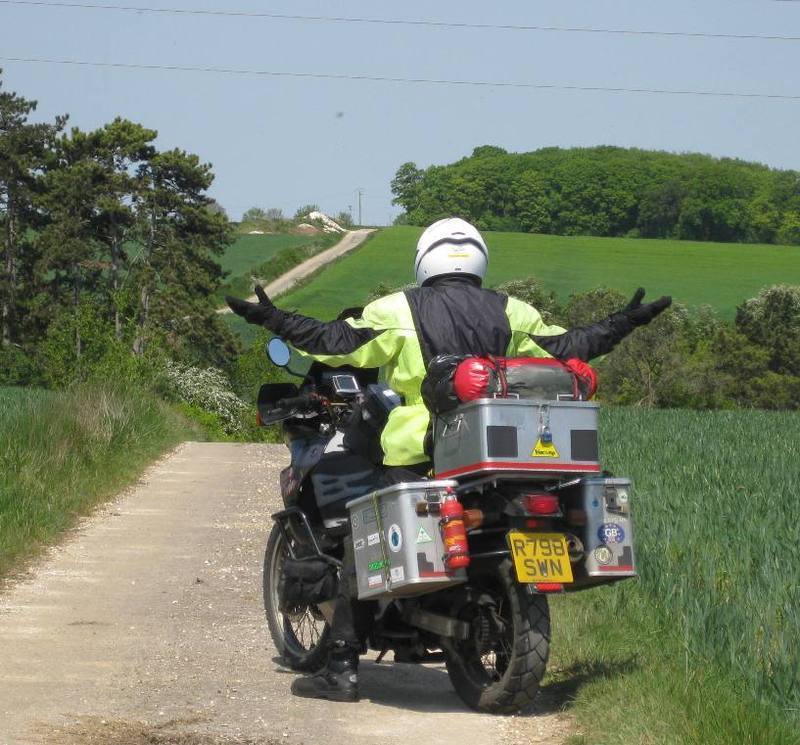
A delivery route should be planned around more than distance. The shortest route is not always the fastest. Junctions, one-way systems, traffic lights, road restrictions, and congestion can add significant time to a short journey.
This matters on UK roads. Department for Transport figures show that local A roads in England had an average speed of just 23.0 mph in 2024. Average delay was 48.3 seconds per vehicle per mile compared with free-flow conditions.
For riders handling several addresses, planning the sequence of stops before leaving can reduce unnecessary mileage and repeated sections of road. A free route planner tool can help organise multiple destinations into a more practical route.
Good route planning should consider:
-
The location of every delivery
-
Required delivery times or customer windows
-
Road restrictions and access limitations
-
Expected traffic conditions
-
The distance between consecutive stops
-
Where the rider can safely stop and unload
The objective is not simply to cover fewer miles. It is to reduce total journey time while keeping the route predictable.
Group Deliveries by Location
When several deliveries are assigned to one rider, grouping stops geographically can make a major difference.
Suppose five customers are located across three neighbouring areas. Sending the rider back and forth between those areas creates unnecessary mileage. A better approach is to complete one cluster before moving to the next.
This becomes particularly useful during busy periods. The rider spends less time making route decisions and more time completing deliveries.
However, geographical grouping should not override delivery deadlines. A stop with a strict time window may need to be prioritised even if it sits outside the main cluster.
Keep the Motorcycle Ready for Work
Mechanical reliability directly affects delivery efficiency. A minor problem can turn into a missed delivery schedule and lost working time.
Before a shift, riders should check the basic operating condition of the motorcycle. Tyre pressures deserve particular attention because incorrect pressure can affect handling, braking and fuel consumption.
A practical pre-shift check includes:
The delivery box or luggage system should also be checked. Loose mounting hardware can create vibration and instability. Heavy items should be secured so they cannot move during braking or cornering.
Load the Bike for Faster Stops
Time spent at each address matters just as much as riding time.
If packages are loaded without a clear system, the rider may need to search through the storage box at every stop. That creates small delays that accumulate throughout the day.
Organise packages according to the planned route. Items for the first stops should be accessible without removing everything else. Fragile goods should be protected from movement, while heavier items should be positioned securely and within the motorcycle's luggage capacity.
Labels should be clear and easy to read. If possible, include the delivery sequence on the package or in the rider's navigation system.
Reduce Unnecessary Waiting
Not every delay happens on the road.
A rider can lose considerable time waiting for customers, searching for entrances, finding loading areas, or dealing with unclear delivery instructions.
Before starting the route, check the information available for each address. Commercial buildings may have separate entrances for deliveries. Residential developments may have restricted access or limited parking.
Where the delivery system allows it, customers can also be given an estimated arrival window. Clear instructions reduce the likelihood of the rider having to make additional calls or search for the correct location.
Use Data to Improve Future Routes
Efficiency improves when delivery performance is measured.
Record basic information such as total deliveries, kilometres travelled, shift duration, failed delivery attempts, and average time per stop. After several shifts, patterns become easier to identify.
One route may consistently cause delays during the afternoon. Another may contain too many difficult access points. A particular group of addresses may work better at a different time.
Motorcycle traffic in Great Britain reached 3.0 billion vehicle miles in 2024, up 3.5% from 2023 and 10.6% above 2019 levels, according to the Department for Transport.
As motorcycle use grows, efficient route management becomes increasingly useful for businesses relying on two-wheeled delivery vehicles.
Build a Repeatable Delivery System
The most efficient motorcycle delivery operation is rarely based on riding faster. It comes from removing wasted time.
Plan the route before departure. Group nearby addresses. Load packages in delivery order. Keep the motorcycle maintained. Record performance and adjust routes when the data shows a recurring problem.
These practices make each individual delivery more predictable. Over a full working day, that can mean fewer unnecessary miles, less waiting, and more completed jobs without placing additional pressure on the rider.
article supplied
-
|
Game Mode On! Royal Enfield Announces Season 6 of “Art of Motorcycling” with Retro 16-bit Theme
|
-
Game Mode On: Reimagine motorcycling through a retro gaming-inspired lens
-
Entries for digital and hand-drawn art are now open, with 7 global winners receiving an all-expenses-paid trip to Motoverse 2026 in Goa - and their creation brought to life in an immersive real-life physical/digital showcase
-
Registrations close 21 October, and winners announced on 5 November 2026
Bruntingthorpe, UK, August 28, 2026: Royal Enfield today announced the return of its global creative platform, #ArtOfMotorcycling (AOM), for its sixth season.
What began in 2020 as a grassroots initiative has evolved into a worldwide cultural movement. In 2025 there were over 52,000 registrations from 12 countries across the globe, all imagining a world of art, motorcycling, and cinema.
This year’s theme, Game Mode On, invites illustrators, graphic designers, and creators to reimagine the thrill of motorcycling through the nostalgic lens of retro gaming.
Inspired by the 16 and 32-bit gaming eras, Season 6 challenges artists to immerse themselves and put forth their creative renditions with Royal Enfield motorcycles into a virtual universe, showcasing their love for the brand Royal Enfield. While retro gaming aesthetics provide the creative starting point, the narrative remains entirely open; whether illustrating a pixelated road trip, a futuristic cityscape, or a fantastical quest, participants have complete freedom to blend gaming aesthetics with their own unique artistic voice. Submissions can be either digital or hand-drawn.
UK submissions for the 2026 edition fall under the following category:
-
The Adults Edition (Global): Open to creators across the UK, India, APAC, LATAM, and North America. Accepting both digital and hand-drawn creatives, entries will first be shortlisted regionally before advancing to the global stage. A Global Winners category will recognise the best international works, while a Riders' Choice award will let the Royal Enfield community vote for their favourite designs on social media.
The Ultimate Reward: Regional and global juries will evaluate the entries across multiple stages. The final seven Global Winners will receive a sponsored trip to Motoverse 2026 in Goa (November 27–29), where their imagined gaming worlds will be brought to life in an immersive, ‘phygital’ (physical and digital) showcase.
Key Dates for Season 6:
-
August 27, 2026: Registrations open
-
September 11, 2026: Jury revealed & entry submissions begin
-
October 21, 2026: Registration window closes
-
November 5, 2026: Winners announced
How to Enter: Participants can register and download the official design toolkit via the #ArtOfMotorcycling section on the Royal Enfield website. Completed entries must be submitted on the website and can be shared on Instagram by tagging @royalenfield and using the hashtags #ArtOfMotorcycling and #AOMGameModeOn.
Registration link: Royal Enfield 'Art of Motorcycling' Season 6
For all media enquiries, including press fleet requests, please get in touch with the Motocom team at [email protected] or call +44 (0) 1525 270100.
About Royal Enfield
The oldest motorcycle brand in continuous production, Royal Enfield has created beautifully crafted motorcycles since 1901. From its British roots, a manufacturing plant was established in Madras in 1955, a foothold from which Royal Enfield spearheaded the growth of India’s mid-sized two-wheeler segment. Royal Enfields are engaging, uncomplicated, accessible and fun to ride; a vehicle for exploration and self-expression. It’s an approach the brand calls ‘Pure Motorcycling’. Royal Enfield’s premium line-up includes Bear 650, Classic 650, Bullet 650 and the Guerrilla 450 modern roadster, Hunter 350, Meteor 350, Super Meteor 650, Interceptor 650 and Continental GT 650 twins, the Shotgun 650, the Himalayan 450, the Scram 440 ADV Crossover, the iconic Bullet 350, Classic 350 and Goan Classic 350. The company recently launched its first electric motorcycle, the FF.C6 as part of its city+ electric mobility brand – the Flying Flea – a fresh take on urban mobility, blending authentic design with advanced technology.
Riders and a passionate community are fostered with a rich profusion of events at a local, regional and international level. Most notable are Motoverse (previously Rider Mania), an annual gathering of thousands of Royal Enfield enthusiasts in Goa, and Himalayan Odyssey; a yearly pilgrimage over some of the toughest terrain and highest mountain passes.
A division of Eicher Motors Limited, Royal Enfield operates through more than 2100+ retail outlets across all major cities and towns in India and through nearly 1200+ stores in 80+ countries around the globe. Royal Enfield also has two world-class technical centres, in Bruntingthorpe, UK, and in Chennai, India. The company’s four state-of-the-art production facilities are located at Thiruvottiyur, Cheyyar, Oragadam and Vallam Vadagal, near Chennai. Across the world, Royal Enfield has seven modern CKD assembly facilities in Bangladesh, Nepal, Brazil (2), Thailand, Argentina and Colombia.
|
|
|
|
|
|
|