Biker News - Regularly updated

Welcome to our News section, where articles are listed below and if relevant within the categories on the right, just to make it easier for you to find what you wish to read...

Please note that the content within our News section (text and images), follows the same copyright laws/notice as all other content on the website - ie not to be reproduced (including slightly amending) without prior consent. 

Most of the articles within the News section is supplied to THE BIKER GUIDE.
We are not responsible for any incorrect information within these articles and/or external links. 

 RSS Feed

  1.  

    The all new Touratech Aventuro Gravel Carbon – a premium helmet for discerning adventure riders


    The new Touratech Aventuro Gravel Carbon combines state-of-the-art materials with a design concept tailored specifically to the demands of combined on- and off-road travels. This ambitious new development focuses on achieving the best possible performance in terms of weight, strength, comfort and functionality.

    Anyone who travels on an adventure bike knows the demands involved: long days in the saddle on narrow roads, gravel tracks and challenging trails. Changing weather conditions, ranging from dry and hot to wet and cold. Dust, mud, blazing sun and persistent rain. This calls for a helmet that not only meets the highest safety standards, but is also lightweight, comfortable, functional and – exceptionally versatile. Purpose-built for this complex scenario, the new Touratech Aventuro Gravel Carbon is the first choice for ambitious motorcycle adventurers. 


    PRO Carbon Technology: Lightweight x high strength
    The shell of the Touratech Aventuro Gravel Carbon is made from X-PRO Carbon, a carbon fibre composite with a fibre content of over 60 per cent. The result is a construction that is both exceptionally light and highly robust. Weighing just under 1,500 grams in size L (including the peak and visor), the Aventuro Gravel Carbon is one of the lightest helmets in its class.
    Three different shell sizes ensure that the thickness of the EPS calotte is always optimally matched to the respective helmet size. The weight optimisation is particularly noticeable during long stages of a journey, as it ensures a high level of comfort.
    When it comes to safety, the Aventuro Gravel Carbon not only complies with the current European standard ECE 22.06, but also has DOT approval. This means the helmet also meets the requirements of the rigorous US standard.


    A pleasant sense of calm, even at high speeds
    One of the advanced technical features of the Touratech Aventuro Gravel Carbon is the Anti-Vibration EPS System. A flexible rubber strip is integrated between the EPS layers of the shell, allowing for minimal movement within the helmet structure. This reduces vibrations caused by air turbulence. This ensures a quieter wearing experience, particularly at higher speeds, and reduces strain on the neck muscles during long stages.


    The specialist for all your needs
    The Aventuro Gravel Carbon is not an all-rounder; it is the specialist for all the requirements that adventure riders place on their head protection. To this end, the helmet can be used in various configurations: as an adventure helmet with a visor and shield, as an aerodynamic road helmet with a visor but without a shield, and as a sporty motocross helmet with a shield but without a visor. The extra-large face cutout not only offers a wide field of vision but also allows the use of virtually all motocross goggles. Switching between configurations takes no time at all and requires no tools.


    From the desert to the North Cape – always the perfect airflow
    Adventure riders are exposed to a wide variety of weather conditions – from cool mornings in the mountains to the midday heat on dusty tracks. The Aventuro Gravel Carbon’s ventilation system is designed to be equally flexible.
    The chin section allows the air flow to be precisely controlled. In cold conditions, fresh air can be directed exclusively to the visor to reduce misting without causing the rider to feel any colder. As temperatures rise, the air is channelled directly to the face. The system is complemented by side ventilation openings in the cheek area, as well as large exhaust vents at the back of the head and in the nape of the neck.
    The result is a ventilation system that not only works effectively in very hot weather, but can also be adapted to cool and changeable conditions.


    Comfort and utility for long travels
    The interior design is also consistently tailored to the needs of discerning adventure riders. The 3D mesh material used promotes air circulation right down to the scalp, whilst the skin-friendly X-mart Dry fabric lining ensures a high level of comfort during long, sweat-inducing stages. All padding is removable and washable.
    For riding in cold weather, a nose and wind guard can be fitted, which largely covers the helmet opening right down to the neck. The cheek pads are also designed to accommodate a hydration system – a feature that offers valuable benefits, particularly on strenuous off-road sections or long-distance rides.
    An adjustable peak extension improves protection against glare when the sun is low in the sky.


    Secure fastening and quick removal of the helmet in case of an emergency
    For the fastening, Touratech uses the X-Lock system made from Peraluman, a particularly lightweight and high-strength aluminium alloy. The system is based on the double-D-ring principle, which is well established in motorcycle racing, and is complemented by a magnetic button that provides additional fixing for the strap.
    The Aventuro Gravel Carbon is equipped with an Emergency Quick Release System for use in emergency situations. The cheek pads can be removed using special pull tabs, enabling first aiders to remove the helmet gently.


    Ready for modern multimedia gadgets
    Standard features include an integrated mount for action cameras and an additional camera mount that can be fitted to the chin guard. This mount can be locked into four positions and rotated through 360 degrees. The helmet also features pre-fitted interfaces for common intercom systems. 


    Designed for adventures big and small
    The Aventuro Gravel Carbon is designed for riders who use their motorbike not just for commuting to work, but for adventures both big and small. Whether it’s a long-distance trip, a crossing of the Alps, a gravel ride or a weekend getaway: the new premium adventure helmet combines low weight, high levels of protection, well-thought-out functionality and outstanding long-distance comfort in an all-round design that is consistently tailored to the needs of modern adventure motorcyclists.


    Aventuro Gravel Carbon | The highlights

    •    High-strength helmet shell made from X-PRO carbon
    •    Lightweight: just 1500 grams (size L, with peak and visor)
    •    Certification: ECE 22.06 and DOT
    •    Three configurations: adventure helmet, full-face helmet, motocross helmet
    •    Tool-free conversion
    •    Three shell sizes
    •    Helmet sizes: S to 3XL
    •    Safe and comfortable: X-Lock fastening system
    •    Anti-Vibration EPS system reduces vibrations
    •    Effective and precisely adjustable ventilation system
    •    Interior lining with 3D mesh material for optimum ventilation
    •    Skin-friendly X-mart Dry fabric lining
    •    Emergency Quick Release for gentle helmet removal
    •    Pinlock visor
    •    Combines perfectly with off-road goggles
    •    Extensive range of accessories as standard
    •    Intercom-ready


    The all new Aventuro Gravel Carbon, as the top-of-the-range model for discerning adventure riders, is a perfect addition to the Touratech helmet range. Also available as convertible adventure helmets with the three configurations – Adventure, Road and Cross – are the Aventuro Matrix Pro made from fibreglass and the Aventuro Pro Carbon+ made from carbon fibre laminate. The Aventuro Travel Carbon flip-up helmet combines maximum comfort with off-road capability.


    The Touratech Aventuro Gravel Carbon is now available in two designs, each in six sizes from S to 3XL.
    Further information is available in the Touratech webshop


  2. The campaign, which is aimed at both motorists and motorcyclists, highlights the small changes everyone can make to ensure our roads are safer. It shows what good riders and drivers do and has the strapline 'We share the road. We share the responsibility.' It has been created based on collision data in Norfolk and a survey of more than 1,200 motorcyclists in the county and will feature videos from YouTuber George's Car Media. 

    Councillor Scott Hussey, Cabinet Member for Public Health at Norfolk County Council, and Scott Norman, Deputy Chief Fire Officer at Norfolk Fire & Rescue Service will both be available for interview and there will be representatives from biker groups in the county, Norfolk Blood Bikes and those who run bike safety and advanced riding courses will be on hand with demonstrations. 

    Details are: 

    Event: Launch of the Norfolk Motorcycle Safety Campaign

    Date: Monday, 27th July

    Time: 10am

    Venue: Route 11 Diner, A11 Northbound near Attleborough, Norfolk, NR17 2PU

    Details: Bikers from Norfolk, including the county's Blood Bikes, the Harley Iceni group and RoSPA will join Deputy Chief Fire Officer Scott Norman and Norfolk County Council Cabinet Member for Public Health, Cllr Scott Hussey, to launch the motorcycle safety campaign - We share the road. We share the responsibility. We'll also have some short demonstrations of some of the advanced courses we offer to riders too.

    RSVP: Catherine Morris-Gretton on [email protected]

    The Norfolk Road Safety Partnership is made up of Norfolk Fire & Rescue Service, Norfolk County Council Public Health, Norfolk Constabulary, Norfolk Highways, National Highways and the East of England Ambulance Service. We're committed to working together to make our roads safer. 


  3. ROYAL ENFIELD’S 125TH YEAR COMMEMORATED WITH UNVEILING OF A WORLD ORIGIN SITE PLAQUE IN REDDITCH

    • Richard Hammond and Redditch Mayor Susan Eacock perform unveiling

    • Classic 650 125th Anniversary Limited Edition displayed with historic machines 

    Redditch, England: Date 23/06/2026: Royal Enfield, the global leader in the mid-size motorcycle segment (250cc–750cc), has celebrated the brand's historic British roots in Redditch, England, with the installation of a ‘World Origin Site’ plaque, marking the legacy of Royal Enfield’s first factory location in this 125th anniversary year.

    The unveiling took place at the site of Royal Enfield’s Hunt End Works, on what is now known as Enfield Road, with motoring journalist and TV personality Richard Hammond joining Redditch Mayor Susan Eacock; flanked by members of the local community, Royal Enfield staff, Riders Club members and surviving workers from the original Redditch manufacturing plant.

    Commenting on the unveiling, Richard Hammond said


    “My heart lies with two wheels, motorbikes are my private passion and as a local boy by birth, growing up nearby to this area, it's a great pleasure to mark this World Origin Site celebrating Royal Enfield; a longstanding, proud brand that rings with familiarity around the world and continues to honour the workers that laid the foundations here in Redditch.”

    Founder of World Origin Site, Martin Wilkie said:

    “It’s just a wall in Redditch today, but 125-years-ago, somebody did something that changed the world and we’re here to mark the exact spot.”

    Royal Enfield motorcycles from five generations lined Enfield Road, highlighting the brand’s title as the oldest motorcycle brand in continuous production, with a legacy spanning 125 years. From the modern ‘Project Origin’ replica of Royal Enfield’s first motorcycle, launched in 1901, to a fully restored first edition 1932 Bullet, the iconic model that began Royal Enfield’s journey to manufacturing in India and is still in production today.

    The 2026 Royal Enfield Classic 650 125th Anniversary Edition, was also displayed to represent a lineage that began with the first Royal Enfield motorcycle in 1901, spanning multiple generations and continents. The limited edition model, due on sale in Europe from August, is a meticulously crafted physical tribute to the brand’s enduring legacy. Embossed with a 125 Year crest in gold on classic red. This Special Edition employs an 'hypershift' paint application, the unique kaleidoscope-like paintwork highlights the fusion of heritage and celebration, the perfect tribute to Royal Enfield’s timeless, iconic, and evolving spirit.

    Royal Enfield has evolved into one of the world’s most iconic motorcycle brands, loved by generations of riders for its timeless design, authentic character, and philosophy of Pure Motorcycling. Today, the brand has a presence across 80+ countries, supported by a growing retail network of over 3,200 stores globally, seven international CKD assembly facilities, and vibrant riding communities around the world.

    Its portfolio spans 15 internal combustion engine motorcycles across Heritage, Cruiser, Roadster, Adventure, and Pure Sport categories, each reflecting the brand’s ability to blend heritage with modern relevance for riders across markets. More recently, Royal Enfield has also marked its entry into electric mobility with Flying Flea, its new city+ electric mobility brand, launching the Flying Flea C6.


  4. Triumph Motorcycles is proud to announce a new partnership with Silverstone’s Bike Track Days, delivering an exclusive experience where Silverstone’s expert instructors showcase the full capability of Triumph’s latest high‑performance motorcycles on track.

    This collaboration places Silverstone’s world‑class instructors at the heart of the experience, demonstrating the performance, precision, and engineering of Triumph’s newest models, including the Street Triple RX, Street Triple RS, Speed Triple RX, Speed Triple RS, and the flagship Speed Triple RR.

    Rather than a traditional ride experience, each session is designed to highlight what these machines are capable of in the hands of professionals — offering customers a unique opportunity to witness elite riding techniques and the true potential of Triumph’s performance line‑up in their natural environment.

    A New Standard in Rider Development

    Each session is led by Silverstone instructors, whose expertise allows them to fully showcase the agility, power, and advanced technology of Triumph motorcycles on track. Through live demonstrations, guided laps, and technical insight, customers gain a deeper understanding of how these bikes perform at the highest level.

    • Street Triple RX — razor‑sharp agility with track‑focused precision
    • Street Triple RS — the ultimate expression of middleweight performance
    • Speed Triple RX — aggressive power with everyday rideability
    • Speed Triple RS — Triumph’s most powerful naked sports machine
    • Speed Triple RR — a modern café racer with superbike‑level performance

    Engineering Meets Expertise

    This partnership brings together Triumph’s class‑leading engineering and Silverstone’s elite instructor team, creating a platform where performance is not just described, but demonstrated.

    Silverstone’s instructors, with decades of racing and coaching experience, provide expert commentary and insight throughout each session — helping customers understand how advanced chassis dynamics, braking systems, and power delivery come together on track.

    A Partnership Built on Performance

    This programme reinforces Triumph’s commitment to showcasing its motorcycles exactly where they belong — on the track, at speed, under expert control. By placing instructors at the centre of the experience, customers are given a rare and authentic view of what these motorcycles are truly capable of when ridden to their full potential.

    Availability

    Sessions will be available throughout the season at Silverstone, please search “Silverstone bike track days” for booking details.

    For more information, please visit https://www.silverstone.co.uk/track-and-testing/bike-track-days


  5. The sound of a two-stroke engine is unmistakable—the characteristic crackle of a chainsaw in the forest, the rumble of a boat engine on a lake, the shrill whine of a scooter on a city street. Simple, lightweight, and powerful, two-stroke engines are still widely used wherever compact size, low weight, and high specific power are critical. Two-Stroke Oils Through the Eyes of Juri Sudheimer. From Formulation to Int
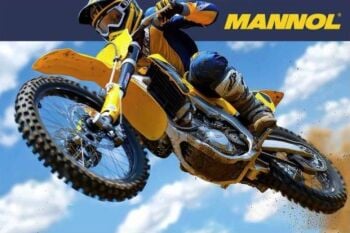
    Two-stroke oils represent a special category of lubricants that requires a fundamentally different approach compared to conventional engine oils, explains Juri Sudheimer, founder of Mannol Oil for a two-stroke engine must dissolve in gasoline, pass through the combustion chamber, lubricate all components, and burn as cleanly as possible without leaving deposits. This may sound simple, but behind that apparent simplicity lie years of research and a complex multicomponent formulation comprising base oils and specialized functional additives

    Juri Sudheimer: Why Two-Stroke Oil Is the Most Complex Formula in the Motorcycle Segment

    “Over more than 30 years in the industry, I have seen how requirements for two-stroke oils have evolved. In the 1990s, it was sufficient for the oil simply to lubricate. Today, environmental standards demand minimal smoke, clean combustion, and protection of aquatic environments for marine engines—while maintaining excellent lubricating performance.”

    A two-stroke (2T) engine differs from a four-stroke engine by its simple and lightweight design (no valves and therefore no bulky and complex valve train), high specific power (two power strokes per crankshaft revolution), but also higher fuel consumption, increased noise and smoke, and the requirement to premix oil with gasoline for lubrication. Thanks to their compact size and low weight, two-stroke engines are commonly used in:

    · Light motorcycles (scooters, mopeds, mokicks) and older motorcycles (rarely used in new motorcycles today);

    · Outboard marine engines;

    · Snowmobiles and light ATVs;

    · Handheld and garden equipment (chainsaws, trimmers, lawn mowers, cultivators, etc.).

    Because these oils must dissolve in gasoline (two-stroke diesel engines do exist but are extremely rare), their composition differs fundamentally from that of conventional engine oils. In addition, two-stroke oils are always dyed so that the user can clearly distinguish between pure gasoline and the ready fuel–oil mixture

    Requirements for Two-Stroke Gasoline Engine Oils

    · The oil must burn cleanly, leaving minimal ash and carbon deposits;

    · The oil must dissolve well in fuel without impairing fuel properties;

    · The oil must provide good anti-wear, lubricating, and anti-corrosion properties, with viscosity suited to climate and operating conditions;

    · For marine applications, the oil must minimize water pollution and be harmless to aquatic life.

    What 2T Oil Is Really Made Of: A Conflict of Component Interests

    Based on these requirements, two-stroke oils typically consist of:

    · Base oil (mineral, semi-synthetic, or synthetic): approx. 50%;

    · Polyisobutylene (PIB): approx. 15%;

    · Solvent: approx. 10%;

    · Additive package: approx. 5%.

    Each component plays both positive and negative roles in the formulation, yet all are essential

    Base Oil (according to Infineum):

    · Improves lubricity by forming an oil film of sufficient thickness and strength;

    · Increases smoke;

    · Promotes exhaust system blockage due to deposits;

    · Contributes to deposits and cleanliness issues.

    Polyisobutylene (PIB):

    · Burns cleanly with minimal deposits;

    · Reduces smoke and carbon formation;

    · Lowers the risk of exhaust system blockage;

    · Improves lubricity and cold-start performance;

    · Increases production cost.   

    Solvent:

    · Improves oil–fuel miscibility, especially at low temperatures;

    · Enhances fluidity of the fuel–oil mixture;

    · Burns cleanly;

    · Reduces smoke and deposits;

    · Reduces lubricating ability.

    Additives:

    · Improve engine cleanliness;

    · Can hinder complete combustion;

    · May increase smoke;

    · Can contribute to exhaust deposits;

    · Increase overall cost.

    As you can see, nothing about two-stroke oil formulation is straightforward.

    “Developing a two-stroke oil is a constant search for compromise,” emphasizes Juri Sudheimer. “More base oil improves lubrication but increases smoke and deposits. More PIB reduces smoke but raises cost. More solvent improves miscibility but reduces lubricity. Every formulation is a balance between conflicting requirements.”

    The Formula Compromise

    “Our laboratory in Klaipeda is equipped with modern facilities for testing two-stroke oils. We test fuel miscibility at different temperatures, measure smoke on dedicated test rigs, and analyze deposit formation on real engines. Every formulation undergoes an extensive cycle of laboratory and engine testing before entering production.”

    Standards and Classifications for Two-Stroke Oils

    To regulate oil quality, a number of international standards and classifications have been developed. For two-stroke oils, these include standards from American Petroleum Institute (API), Japanese Automotive Standards Organization (JASO), International Organization for Standardization (ISO), and National Marine Manufacturers Association (NMMA) with its TC-W3 marine standard. Thailand also has its own certification system: TISI (Thai Industrial Standards Institute).

    Many categories have been discontinued; the active ones include:

    · API TC – for highly loaded two-stroke engines (200–500 cc). Includes tests for ring sticking, pre-ignition, and cylinder scuffing. Not applicable to outboard engines.

    JASO considered API TC insufficiently precise, as oils meeting only this standard could produce excessive smoke and emissions. Therefore, JASO introduced its own categories:

    · JASO FB – requirements for lubricity, detergency, and exhaust emissions;

    · JASO FC – stricter detergency and smoke limits than FB;

    · JASO FD – same as FC, but with even stricter detergency requirements.

    All categories are tested on the same engines, with quality levels assigned based on defined threshold values. Results are published relative to the high-performance reference oil JATRE 1.

    In the mid-1990s, European testing revealed that JASO FC no longer met the needs of European two-stroke engines. New long-duration tests were introduced, including a 3-hour Honda Dio test to assess piston cleanliness and detergency. These procedures were developed by CEC working groups with European engine and lubricant manufacturers.

    ISO currently classifies two-stroke oils into three categories:

    · ISO-L-EGB – JASO FB + piston cleanliness test;

    · ISO-L-EGC – JASO FC + piston cleanliness test;

    · ISO-L-EGD – JASO FC + piston cleanliness and detergency tests.

    Why Certification Is Expensive—but Essential

    “Developing oils that comply with international JASO and ISO standards required major investments in R&D and test equipment,” says Juri Sudheimer. “Since 2004, we have invested over €90 million in production development, a significant portion of which went into laboratories for two-stroke oil testing.”

    How to Choose the Right Two-Stroke Oil

    The main rule: follow the equipment manufacturer’s recommendations. Operating manuals specify required standards and fuel–oil mixing ratios.

    Basic selection guidelines:

    · Motorcycles (scooters, mopeds): JASO FB/FC/FD;

    · Garden equipment: oils with enhanced thermal stability;

    · Outboard engines: NMMA TC-W3;

    · Snowmobiles: oils with low-temperature additives.

    Important: Never use conventional engine oil in a two-stroke engine. It does not dissolve in gasoline, does not burn cleanly, and can cause rapid deposit formation, ring sticking, and serious engine damage.

    Mannol Philosophy: Specialization for Every Application

    “Two-stroke oils may seem simple, but that simplicity is deceptive,” concludes Juri Sudheimer. “Behind every canister are years of research, hundreds of tests, and meticulous component selection. Oil for a scooter differs from oil for a chainsaw; oil for a boat engine differs from oil for a snowmobile.”


    article supplied