| | Biker News - Regularly updated
Category: Motorcycles
-
Milton Keynes, UK/12 July 2022: Triumph has announced the completion of its TE-1 electric motorcycle development project, powered by Scalable Integrated Modular Inverter (SIMI) technology from Helix.
During rolling road and track trials, the TE-1’s electric powertrain delivered 130kW (177PS/175bhp) peak power, for a 0-60mph time of 3.6 seconds and 0-100mph in 6.2 seconds. It also achieved a 100-mile range, based on live testing and official projections.
The high power density that characterises Helix electric powertrains contributed to making the TE-1 prototype as much as 25% lighter than comparable electric motorcycles and achieving its outstanding power-to-weight ratio.
Integral Powertrain Limited’s e-Drive division developed the Scalable Integrated Motor and Inverter (SIMI) in close cooperation with Triumph from 2018. On 4 July 2022, the company relaunched its electric powertrain engineering and manufacturing capability under the Helix brand. Helix offers unique Scalable Core Technology across three Product Levels, while advanced product development, epitomised by the Scalable Integrated Motor and Inverter, is delivered by its X-Division.
Andrew Cross, Helix Chief Technology Manager, said: “We’re delighted to see the final TE-1 motorcycle testing phase completed and further validation of the performance and efficiency of our Scalable Integrated Modular Inverter.
“In its TE-1 application, the motor achieved peak and continuous power densities of 13kW/kg and 9kW/kg respectively; 60% higher than Advanced Propulsion Centre technology roadmap targets for 2025. All this was achieved using materials and processes compatible with volume automotive production and using a motor scalability concept that provided a springboard to our Scalable Core Technology, providing similar performance levels at much greater manufacturing scale than previously possible.
“We’re really proud to have been a key part of this exciting project, which is a landmark for electric motorcycles and British industry.”
About Helix
Helix engineers and manufacturers the world’s most power-dense motors and complementary inverters for demanding automotive, racing, aerospace, marine and industrial applications. Its unique Scalable Core Technology and Flexible Manufacturing Facility (FMF), ensure straightforward access to the most powerful, compact, efficient electric powertrains on the market. Helix Scalable Core Technology is delivered through three strategic Product Levels, while the cycle of electric innovation begun by its founders almost 20 years ago continues with X-Division, an advanced technology development group.
Formerly Integral e-Drive, the launch of a new corporate brand in 2022, Helix, including a new website and logo, aligns with the strategic transformation from consultant to full-service supplier of premium electric powertrains and marks another major milestone in the evolution of the organisation. Helix is investing and gearing up as a technology-driven global company, targeting new markets and sectors.
For more information visit ehelix.com
-
Public debut of the custom Indian Chief by Tank Machine x Rise Designs
Awarded to the lucky winner of the prize draw on the main event stage
Indian Motorcycle, in collaboration with Wheels & Waves, commissioned four European builders in December 2021 to design their vision of an Indian Chief for the resurgent Wheels and Waves festival. More than 35 000 people voted for their favourite design and, in combination with a panel of Super-Voters, ‘GRIND Machine’ by Tank Machine x Rise Designs was announced as the top-ranked entry. Completed in just three months, ‘GRIND Machine’ made its public debut at the opening of the Artride exhibition during Wheels and Waves on Thursday June 30 and was awarded to prize draw winner, Fabien Orquin, on the festival’s main stage on Saturday July 2.
Clément Molina founded Tank Machine in 2015 with a focus on motorcycle design, customisation and the development of Plug & Play Kits. Already well known for his many outstanding customisations of Indian Motorcycle models, his submission for the Indian Chief Design beat strong competition to become the winning concept that would be turned into reality.
“I was honoured to be chosen as one of four custom builders to submit designs for the Indian Chief,” said Molina. “As a specialist that loves working on bikes from Indian Motorcycle, I was really enthusiastic about the opportunity, only heightened by the partnership with Wheels and Waves, an event that I enjoy so much.”
Working from the brief to create a vision of an Indian Chief inspired from the past, anchored in the present, and looking towards the future, Molina teamed up Antonin Bazin from Rise Designs to merge their “Board Culture” into the project and reflect the skate element of Wheels & Waves.
“We were really happy to win and have the opportunity to realise the design, even though it was a big challenge to complete the project in just three months for the Artride exhibition,” Molina continued. “But the process was so enjoyable, thinking about the bike, the details, working with different materials like skateboard decks, fabricating new parts and then fine tuning everything. It’s a pleasure to reveal the completed bike at Wheels and Waves and to then hand it over to Fabien. It’s great to know he truly understands and appreciates the time and effort that has gone into the build. He is the perfect new owner for me – an engineer, an engine technician, and a really good guy.”
Randomly selected from the thousands of public voters, Fabien Orquin, an automotive engineer from the French city of Rouen, won a VIP trip to the 2022 Wheels & Waves festival to enjoy the event and be presented with his customised Indian Chief.
“When I was told I had won, I just couldn’t believe it, it was incredible,” said Orquin. “I am so happy to know that this amazing motorcycle is going to be mine, especially because it is the design I voted for. It was also great to meet Clément and hear about the design and build process. Everything about the bike is amazing, every time I look there is another detail to discover.”
The Design and Engineering teams at Indian Motorcycle always had customisers in mind when bringing the Indian Chief to life. A key tagline being ‘Keep it simple so you can easily work on it and customise it’ and a feature of the Chief that Tank Machine took advantage of.
“There are so many nice pieces of the stock bike, especially the central and most beautiful piece, the engine,” said Molina. “The Indian Chief is really easy to strip back to a great base and the idea was to remove a lot of things, keep only the essentials and then build back up with a different balance, adding details that really change up the look of the final machine.”
GRIND Machine’s unique look begins with the big block Continental TKC enduro tyres wrapped around black Excel spoked rims that work with new bars, new rear suspension, and one-off seat unit to change the stance and overall lines of the bike.
Tank Machine created new wider handlebars and lower risers for a vintage style that is echoed by the gaiters applied to the forks and rolled up poncho attached to a custom bracket by webbing straps. At the rear, Öhlins piggyback shocks with longer top mounts lift the bike slightly and add a colour accent as well as providing a high-quality ride.
The one-off seat unit, all designed in house, features the names of the project’s partners discretely machined into the base and the seat pad enhances the retro bobber look with a brown leather top with waxed material sides. A bottle opener hanging from the right of the seat is a nod to the after-ride party atmosphere of Wheels & Waves and a detail that really connected with the new owner. “My hobby is brewing my own beer, and when I saw the bottle opener, it really made me smile,” said Orquin.
Keeping the stripped back bobber look clean are hand-fabricated minimalist fenders, mini-indicators on the forks and seat unit, mini taillight and a LED headlight with ring running light. A secondary guarded PIAA yellow light adds a cool retro touch.
The ‘Board Culture’ of Ride Designs is reflected in the use of skateboard deck wood and grip tape adorning the centre of the fuel tank and either side of the seat unit which are mounted with metal brackets inspired by skateboard trucks. The influences of Wheels and Waves are further heightened with Vans waffle handlebar grips and custom-made foot pegs that take inspiration from BMX grind pegs.
Also designed in conjunction with Rise Design is the aluminium engine protection plate behind the front wheel in a brushed metal finish that is also applied to the exhaust heat shield, CNC machined fuel cap and engine parts to give an old bike look on a modern machine. Textured and matte finishes have also been applied to various covers and particularly the frame where the matte finish reveals the beauty of the shape and welds of the classic-style steel frame. Adding to the retro race look, the standard headers were wrapped and mated to shorter SuperTrapp silencers.
With a paint scheme from Rise Designs that features a brushed metal base, weathered green stripes with red accents, the finishing touches to any custom are the interesting details that are only noticed on a second or third close look. For GRIND Machine, these include the decorated red throttle valve inside the custom bell housing, the cut back primary drive cover, and the creator’s logos machined into the black pulley cover and engine covers.
Indian Motorcycle visit IndianMotorcycle.eu and follow along on Facebook, Twitter and Instagram.
-
Following the news of Indian Motorcycle UK’s intention to open its first dedicated Brand Experience Centre in West London earlier this year, the centre has now enjoyed its official launch, welcoming customers, friends of the brand and VIPs.
Coinciding with the recent BikeShed event at Tobacco Dock, the Indian Motorcycle UK team welcomed more than 70 guests to the event, showcasing the UK’s first Brand Centre, located on the prestigious Kensington High Street in West London.
Situated on the landmark site that was once the home of the Bristol Car Company. The iconic corner showroom, part of the Hilton Olympia Hotel, was fully refurbished over two floors for the new Brand Centre, doubling the display space and allowing for a complete range of Indian Motorcycles, accessories, clothing and heritage to be displayed in the best experience possible.
Indian Motorcycle UK’s Andy Simpson, commented, “We’re extremely proud to be able to officially launch a Brand Experience Centre here in the UK, especially in such an iconic location. Thanks to fantastic support from the team at Krazy Horse, we’ve been able to make this project not just a reality, but a place that our customers the world over will choose as a destination to visit when in London. If the enthusiasm from our guests at this launch event is anything to go by, this will be a very much must visit destination.”
Joining the Indian Motorcycle UK team and senior management from the U.S on the night were a host of friends of the brand, including ex-grand prix racer Steve Parish, Indian Motorcycle Flat Track racer, Leah Tokelove, Dimitri Costa, as well as customers and fans of the brand.
The Indian Motorcycle London Brand Experience Centre can be found at 368 – 370 Kensington High Street, London, W14 8NL, Tel: 0203 007 1666 Web: www.indianmotorcycle-london.co.uk
-
There is no greater feeling than riding a motorcycle and feeling the wind on your face. The thrill that a motorcycle gives is something that other forms of transportation can not. However, riding a motorcycle is an activity that can turn very dangerous. Problems with the motorcycle or the road can lead to serious injuries. A lot of people get involved in fatal motorcycle accidents yearly. Still, this doesn't mean that you should stop riding your motorcycle. Protective clothing can help to minimize the risk associated with riding a motorcycle. By protecting different parts of the body, they help the rider to feel safe and secure. 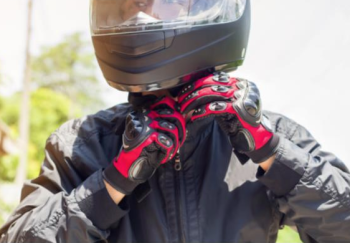
Some of the most essential protective clothing for riding your motorcycle is:
1. Helmets
This is by far the most important protective clothing there is. It protects the skull from harm, which makes it very important. The human head is something that can easily be affected by external forces. By riding your motorcycle, you are exposing your head to these external forces. A sudden impact on the head can cause minor issues like concussions or major issues like fractured skulls.
Therefore, your head must be well protected when you are riding your motorcycle. Helmets are designed to crumple and take most of the impact in case anything happens.
2. Jackets
When you think about it, the cooling sensation that comes from riding a motorcycle isn't all that good. It can cause different health issues that can affect the lungs. If this is mixed with the cold that comes from riding in the rain, the results could be disastrous. Jackets are therefore the perfect protective clothing to take care of this. They are comfortable and warm, making the rider feel hot when traveling in cold weather. Also, most jackets are waterproof, so you can ride your motorcycle even when it is raining.
3. Boots
Even though it is worn on the leg, this helps to make the rider feel safe. A boot helps to protect the ankle of the rider. Accidents can cause a lot of damage to the legs and ankles. They can crush the legs and ankles of riders. Boots with solid soles help to reduce the impact of such accidents. Also, some boots come with shin protection, which protects the shin whenever it hits the brakes.
4. Gloves
Gloves are useful protective clothing for any motorcycle rider. They help to give a good grip on the motorcycle when the rider is riding. Also, the gloves help to keep the hands warm and toasty.
5. Pants
Pants are an underrated, yet fairly useful protective clothing. They help to protect the upper legs by keeping them warm and protecting the skin from harm. Some pants are padded at the hips and knees, to protect those parts from excessive impact. Good pants are light and comfortable, yet stable and secure to make the rider stable on the motorcycle.
Conclusion
The thrill of riding a motorcycle should not make you forget to be safe on it. It is best to wear light and comfortable protective clothing to protect you from unexpected occurrences.
Finally, click here to get the best motorcycle gear on BMW Motorrad.

article supplied
-
SOLIHULL, West Midlands 20th June 2022: Silence UK has combined its electric performance with electrifying style, with the addition of the new range-topping S01+ model to its e-moto scooter range.
Based on the S01 Connected and with performance equivalent to a 125cc motorbike, the S01+ is priced at £6,795 OTR and features a 5.6 kWh and 7.5kW motor, reaching 30mph in just 3.9 seconds and on to a limited top speed of 62mph.
For added response when you need it, S01 + offers a faster acceleration in Sport mode and features an innovative “push-to-pass” overtaking mode, which briefly increases the limited top speed to 68mph.
To suit its performance aesthetic, S01+ augments the comprehensive S01 Connected specification, with adjustable suspension, Galfer ventilated brake discs and a suite of sporty design cues, including a contrast texture seat, red detailing and Anthracite grey paint.
Connectivity comes through the dedicated Silence app, for Apple and Android devices, which allows control of important settings, such as checking charge status and activating remote lock/ unlock, as well as route planning through embedded Google Maps.
Tony Lewis, co-founder of Silence UK, said: “Silence is a stylish and practical alternative to combustion bikes, whether you’re an individual, or business user. Now with S01+, we’re adding extra sports style, for those who want their Silence to stand out from the crowd. Production of the S01+ is available in limited numbers so it’s very much first come first served!”
The S01+ is the sixth model in a growing Silence plug-in range which offers all-electric two-wheel options, to suit any budget or need.
Private riders and commuters will be drawn to the stylish S01 and new Urban spec, available in both S01and S02 trim. For professional riders and fleets, the S02 Business and S02 Business+ make the perfect work partners, with long-range battery options and a large collection of practical accessories.
All feature Silence’s patented ‘click and go’ removable and portable Silence lithium-ion battery, which can be charged through any 240V socket and can reduce running costs to a penny per mile – a massive 80% less than ICE-powered scooters.
Every Silence e-moto scooter comes with a comprehensive manufacturer’s warranty of two years for the e-moto scooter and three years for the battery, plus two years’ AA UK roadside assistance cover.
For more information on Silence, visit www.silenceuk.com
|